Most FiveM server owners price their store packages one of two ways: they pick a number that feels fair, or they copy whatever the server they played on last year was charging. Neither is pricing strategy. Both leave money on the table — or drive away players who would have bought if the value had been framed correctly.
Pricing is a set of decisions that compound. The right tier structure, the right anchor point, and the right presentation can move your conversion rate by 20–30% without changing what you actually sell.
Build a Tier Ladder, Not a Menu
A flat list of packages — VIP for £4.99, Premium for £9.99, Elite for £14.99 — gives players no frame of reference. They have no way to decide what is reasonable because they have nothing to compare it to.
The fix is a good / better / best ladder with a decoy at the top. If your real target is the middle tier, price it so that the tier above exists mainly to make the middle look like the smart choice.
A working example:
- Supporter — £4.99/month. Colour tag, Discord role, small vehicle livery.
- VIP — £9.99/month. Everything above plus priority queue, custom plate prefix, garage expansion.
- Elite — £19.99/month. Everything above plus a reserved parking spot, a unique title, early access to seasonal content.
Most players buy VIP. Elite exists so VIP stops feeling expensive — it is 50% of Elite, which reads as restraint rather than cost. This is price anchoring: buyers don't judge prices in isolation, they compare.
Do not skip the decoy tier. If your highest tier is your middle tier, you have no anchor.
Charm Pricing Still Works, But Know Why
£9.99 outperforms £10.00 in A/B tests consistently, not because players can't do the arithmetic but because the left digit changes. The brain reads 9 before it reads .99, and 9 feels categorically different from 10.
Use charm pricing (ending in .99 or .95) for individual packages. For bundles, frame the price as a saving rather than a total:
"VIP + Starter Kit Bundle — £14.99 (save £5)"
Even if the player was never going to buy both items separately, the framing of a saving triggers perceived value. The number £14.99 means more when it comes with context than when it stands alone.
Limited-time pricing works when it is real. A launch discount that expires in 48 hours is legitimate scarcity. A countdown timer that resets daily is not — players notice, and trust is harder to rebuild than a sale is to run again.
What FiveM Players Actually Pay For
Cosmetic perks convert better than utility perks in a Cfx.re compliant store, and that is a feature, not a limitation. Players spend on things that signal identity:
- Custom name tags and in-game titles
- Priority queue (especially on servers with regular queues of 20+ players)
- Unique vehicle liveries or plate prefixes
- Personal garage slots or housing priority
- Discord roles with visible community status
Cfx.re prohibits pay-to-win mechanics. No extra health, no weapon advantages, no immunity perks. Any package that gives a paying player a gameplay edge puts your listing at risk. Design around this constraint from the start — cosmetic and convenience perks are what long-term players value most anyway.
One-Off Purchases vs Subscriptions
A player who buys a £9.99 one-time package is done after that transaction. A player on a £6.99/month subscription is worth £83.88 over twelve months if they stay.
Subscriptions require more trust to convert but generate predictable revenue. Run both. Use one-off packages for players testing your server, and make subscriptions the obvious choice for regulars with perks that stack month over month.
Well-run stores like scripts-tebex.io surface subscription tiers prominently rather than bury them — that positioning is intentional.
Regional and Currency Pricing
Tebex supports multi-currency. A price set only in GBP or USD is leaving conversions behind in regions where those currencies hit differently. If a significant share of your playerbase is in Eastern Europe, Brazil, or Southeast Asia, check whether your £9.99 converts to something that reads as expensive in their local context.
Regional pricing is not charity — it is maximising total revenue by not pricing out markets that would buy at a lower point.
Test the Numbers and Read the Data
Price intuition is a hypothesis. Tebex gives you the data to test it.
Watch two metrics: conversion rate (percentage of store visitors who buy) and average order value (how much each buyer spends). Low conversion usually means price or presentation friction. Low average order value means buyers are stopping at your cheapest tier — the mid-tier framing needs work.
Change one variable at a time. Adjust the middle-tier price, rename the tier, or add a screenshot. Then measure over comparable traffic before drawing conclusions.
Store Presentation Reduces or Creates Friction
The price architecture falls apart if the store is hard to use. Players should not be surprised at checkout — every fee, currency, and renewal date should be visible before they click buy.
Each package needs a value statement, not just a feature list. "Priority queue" is a feature. "Connect in under 30 seconds even at peak hours" is what sells it.
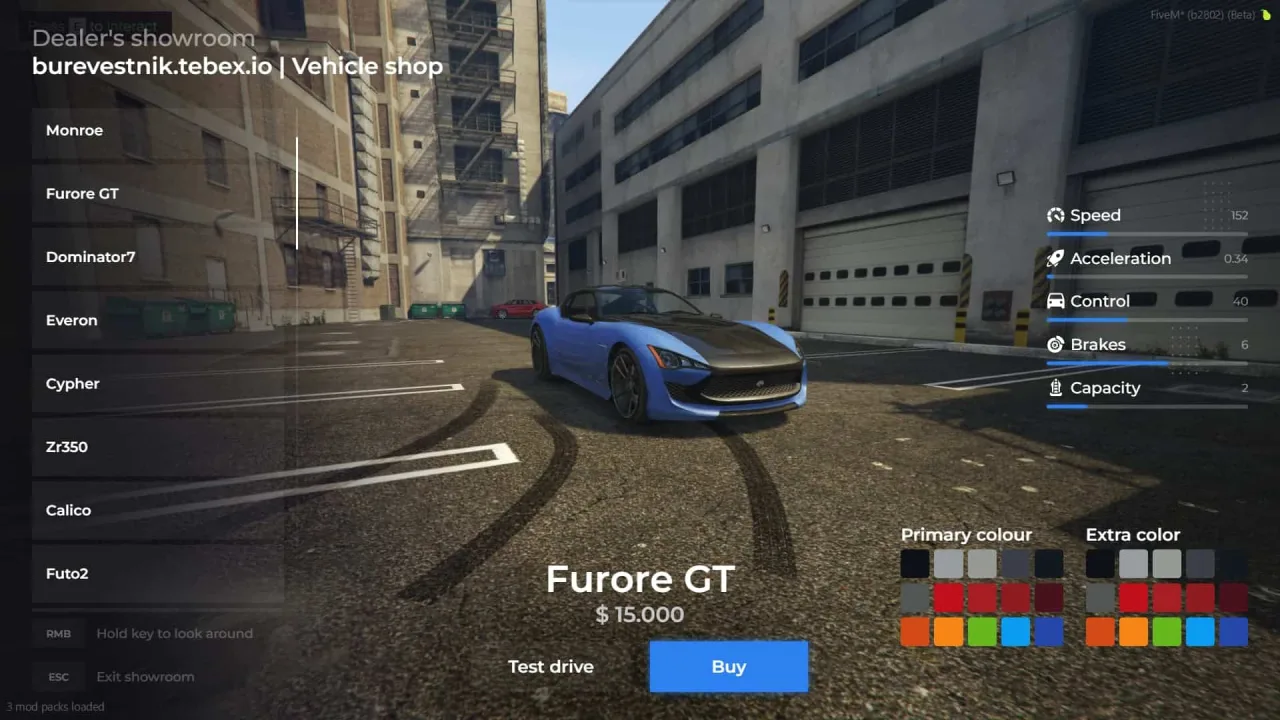
Use screenshots. Stores like cars-tebex.io demonstrate this well — visual proof of what a player is buying closes the trust gap faster than text alone.
Get the tier ladder right, set your anchor, and treat the store presentation as the final stage of the funnel. All three have to work together.